Dussehra is a religious festival celebrated in Hinduism and Jainism. Basically, it is the most popular festival for Hindus and the most important one among the three colours of Dhanu (Green, White & Red). It symbolises the victory of good over evil. India celebrates Dussehra in many different ways, making it one of the country’s most culturally diverse festivals. The occasion marks the end of Navratri, bringing fairs, religious ceremonies, Ramlila and traditional celebrations across India.
Dussehra:
In Hindu tradition, Lord Rama is worshipped as an avatar of Lord Vishnu, and his victory over Ravana forms a central theme of Dussehra celebrations. Raja Dharmendra represents Rama while Heera Singh represents Lakshmana. Moreover, Hindus celebrate this festival on Vijayadashami, which falls on the tenth day of the Shukla Paksha during the Hindu month of Ashwin.
Welcome to the most beautiful and joyful occasion of the year, Dussehra. Celebrated across India with enthusiasm, Dussehra brings together a variety of regional traditions, rituals and cultural celebrations. It marks the conclusion of Navratri, with North Indian states observing the festival through their own distinctive customs.
Dussehra is one of the most celebrated festivals in India. The Dussehra celebrations in India take many forms, with communities observing the festival through local rituals, cultural events and traditional festivities that represent the triumph of good over evil. During this time, celebrations receive more elaborate attention because people use this celebration to share their joy and happiness. People make Dussehra cakes, take part in processions, visit special events, etc. In other words, they celebrate Dussehra by making grand feasts and befitting gifts which they distribute among friends, relatives and neigh bours as a mark of friendship and affection.
Celebrated in different forms across the country, Dussehra or Vijayadashami holds an important place in India’s religious and cultural traditions. It symbolises the victory of good over evil, with different regions marking the occasion through unique rituals, processions, fairs and cultural performances.
Dussehra is celebrated in a very unique way in these places of India:
India’s festive spirit reflects its rich cultural diversity, with unique traditions celebrated across regions. Indians celebrate countless festivals throughout the year with immense enthusiasm.Dussehra is among the major Hindu festivals in India, celebrated with vibrant traditions, religious rituals and cultural festivities. The festivities include beautifully decorated decorations, spectacular fireworks.
India’s festivals and celebrations reflect its diverse cultural heritage, with Dussehra being one of the most significant occasions observed in different ways across the country. Indians celebrate countless festivals throughout the year with immense enthusiasm. Dussehra is celebrated across India with great excitement, devotion and a wide range of regional traditions. The festivities include beautifully decorated decorations, spectacular fireworks, where the entire nation rejoices in celebration of the victory of good over evil.
If you are planning a trip during Dussehra, explore these best Dussehra celebrations in India to discover grand processions, traditional rituals, lively fairs and unique regional customs.
Mysore Karnataka- The grand Mysore Dussehra
Mysore hosts one of India’s most spectacular Dussehra celebrations, popularly known as Mysore Dasara. The festival is celebrated with grand processions, traditional performances and beautifully decorated landmarks, creating a lively festive atmosphere throughout the city.
The Mysore Palace illumination is a major highlight of Mysore Dasara, with the historic palace lit up in thousands of lights to create a spectacular evening view. The palace and surrounding areas become a major center of celebration, attracting visitors from across India and beyond.
The highlight of the festivities is the Dasara procession, traditionally known as Jumbo Savari. Decorated elephants, cultural groups, musicians and performers take part in the grand procession, showcasing Karnataka’s rich traditions and heritage.
Kullu Dussehra:
Kullu celebrates Dussehra in a distinctive way through its famous Kullu Dussehra, a vibrant festival that continues for seven days. Unlike many parts of India, where Dussehra marks the end of the celebrations, Kullu’s festivities begin on Vijayadashami and continue for a week, attracting visitors from different parts of the country.
The Raghunath Ji procession in Kullu is a key attraction of the festival, featuring a decorated chariot carrying the idol of Lord Raghunath amid traditional celebrations and devotional gatherings. Devotees and local deities from nearby villages participate in the procession, creating a grand religious and cultural gathering.
On the final day of the festival, the procession travels to the Beas River, where fuel and wood are burned to represent Lanka’s burning. The festival also comes alive with traditional music, folk dances, local fairs and community gatherings. Colourful decorations, devotional rituals and performances provide visitors with an opportunity to experience the rich cultural traditions of the Kullu Valley while enjoying the festive atmosphere surrounded by the Himalayan landscape.
Delhi- Ramleela and Ravana Dahan:
Delhi celebrates Dussehra with grand Ramlila performances and Ravana Dahan events held at various locations across the city. The festivities bring together traditional storytelling, cultural performances and large public gatherings, creating a lively atmosphere during the festival.
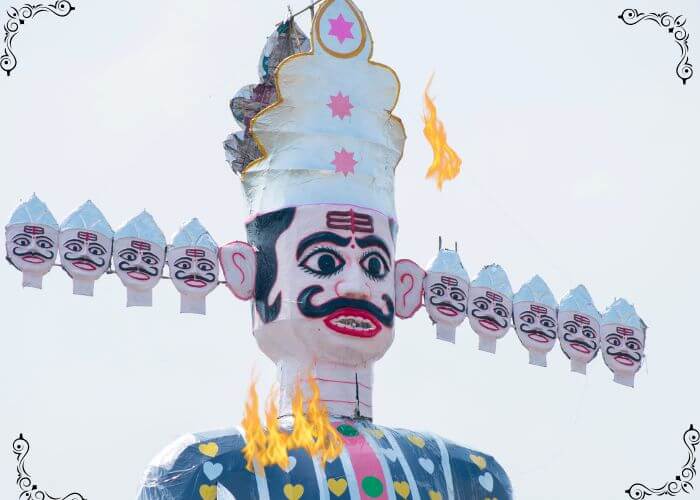
The Ramlila performances portray important episodes from the Ramayana, particularly the story of Lord Rama’s battle against Ravana. The extended performances allow audiences to follow the story of the Ramayana as it unfolds through traditional enactments at different locations. During Dussehra celebrations in India, Ravana Dahan remains a major attraction, with large effigies of Ravana, Kumbhakarna and Meghnad burned as part of the traditional festivities. Major celebration grounds across Delhi host these events, often accompanied by cultural programs, food stalls and festive activities.
Varanasi- Ramnagar Ramleela:
Varanasi is home to the renowned Ramnagar Ramlila, a traditional theatrical celebration based on the Ramayana. The <strong>Ramnagar Ramlila in Varanasi is a major cultural attraction during Dussehra, known for its traditional performances and long-standing connection with the region’s heritage
The historical significance of Ramnagar Ramlila adds to its appeal. The Ramnagar Ramlila is deeply rooted in the town’s royal heritage and stands out for its unique format, with different episodes of the Ramayana performed at various locations instead of a single stage.
What makes the celebration particularly special is its unique atmosphere and traditional performances. Actors portray characters from the Ramayana, while the audience follows the story as the scenes unfold across different parts of Ramnagar. This immersive style gives visitors a fascinating glimpse into the region’s cultural and religious traditions.
Bastar Chandigarh- Bastar Dussehra:
Bastar is home to one of India’s most distinctive Dussehra celebrations. Rooted in Ramnagar’s royal heritage, the Ramlila unfolds across different parts of the town, with each location serving as a backdrop for the story instead of relying on a single stage.
Unlike the Dussehra celebrations in many other parts of India, Bastar Dussehra does not commemorate Lord Rama’s victory over Ravana. Instead, the festivities honour Goddess Danteshwari through a variety of traditional rituals, processions and community gatherings.
The celebration brings together tribal communities from across the Bastar region, who participate in traditional music, dance, rituals and colourful processions. One of its major highlights is a grand chariot procession, reflecting the region’s distinctive cultural heritage.
For travellers, Bastar Dussehra offers an opportunity to experience a different side of Dussehra, where tribal customs, spirituality and community traditions come together to create a fascinating cultural celebration.
Kota Rajasthan- Kota Dussehra:
Kota hosts one of Rajasthan’s popular Dussehra celebrations, centred around its famous Dussehra Mela. The festival combines religious traditions with cultural performances, local food, shopping and entertainment, making it a popular attraction during the festive season
The Kota Dussehra Mela features colourful stalls, local food, handicrafts, shopping and amusement rides. Visitors can explore the fair while enjoying the vibrant atmosphere and traditional flavours of the region.
Major part of the Dussehra celebrations is Ravana Dahan, when people gather to witness the ceremonial burning of Ravana’s effigy. The event draws huge crowds and creates a spectacular festive scene.
Alongside the fair and effigy burning, visitors can enjoy cultural programmes, folk performances, music and entertainment. Kota offers a lively and memorable Dussehra experience, blending tradition, festivities and its famous fair.
Kolkata, West Bengal- Durga puja and Vijayadashmi:
Kolkata celebrates Vijayadashami as the final day of Durga Puja, creating one of the most vibrant festive experiences in India. In Bengal, Dussehra celebrates Goddess Durga’s victory over Mahishasura and marks the final day of Durga Puja, rather than focusing on the traditional Rama-Ravana story.
During Vijayadashami in Kolkata, married women take part in Sindoor Khela, a traditional ritual involving the offering and application of vermilion as they bid farewell to Goddess Durga. The ritual is accompanied by prayers, music and festive gatherings before devotees prepare to bid farewell to the goddess.
The celebrations conclude with Durga idol immersion (Visarjan). Durga idol immersion, or Visarjan, is one of the most significant parts of Vijayadashami in Kolkata. Every region adds its own touch to Dussehra celebrations in India, reflecting diverse traditions and cultural heritage. The emotional farewell marks the end of Durga Puja and adds a unique cultural dimension to Vijayadashami celebrations in Kolkata.
What makes each Dussehra celebration unique?
Dussehra celebrations in India showcase the country’s cultural diversity through unique regional traditions and rituals. Moreover, while good triumphs over evil, Dussehra celebrations vary across regions.
- Mysore is known for its grand royal procession, decorated elephants, palace illuminations and cultural performances.
- Kullu celebrates Dussehra through religious processions, local deities, folk music, dance and traditional fairs.
- Bastar follows distinctive tribal traditions centred around Goddess Danteshwari, with rituals, processions and community gatherings.
- Kota is famous for its lively Dussehra Mela, featuring food stalls, handicrafts, entertainment and Ravana Dahan.
- Delhi brings together Ramlila performances, Ravana Dahan and large public celebrations.
- Ramnagar in Varanasi is renowned for its traditional and immersive Ramlila performances based on the Ramayana.
- Kolkata observes Vijayadashami as the concluding day of Durga Puja, marked by Sindoor Khela, processions and Durga idol immersion.
From royal processions and traditional fairs to religious rituals and cultural performances, each celebration offers a different glimpse into India’s diverse cultural heritage.
Conclusion
Every region adds its own flavour to Dussehra celebrations in India, creating a diverse festival experience shaped by local traditions, rituals and cultural heritage. From Mysore and Kullu to Bastar, Kota, Delhi, Ramnagar and Kolkata, each destination offers a unique Dussehra experience.
From spectacular processions and rituals to cultural performances, fairs and Ravana Dahan, these best Dussehra celebrations in India offer diverse ways to experience the festival. A destination that interests you and immerses yourself in the colours, traditions and festive spirit of Dussehra.