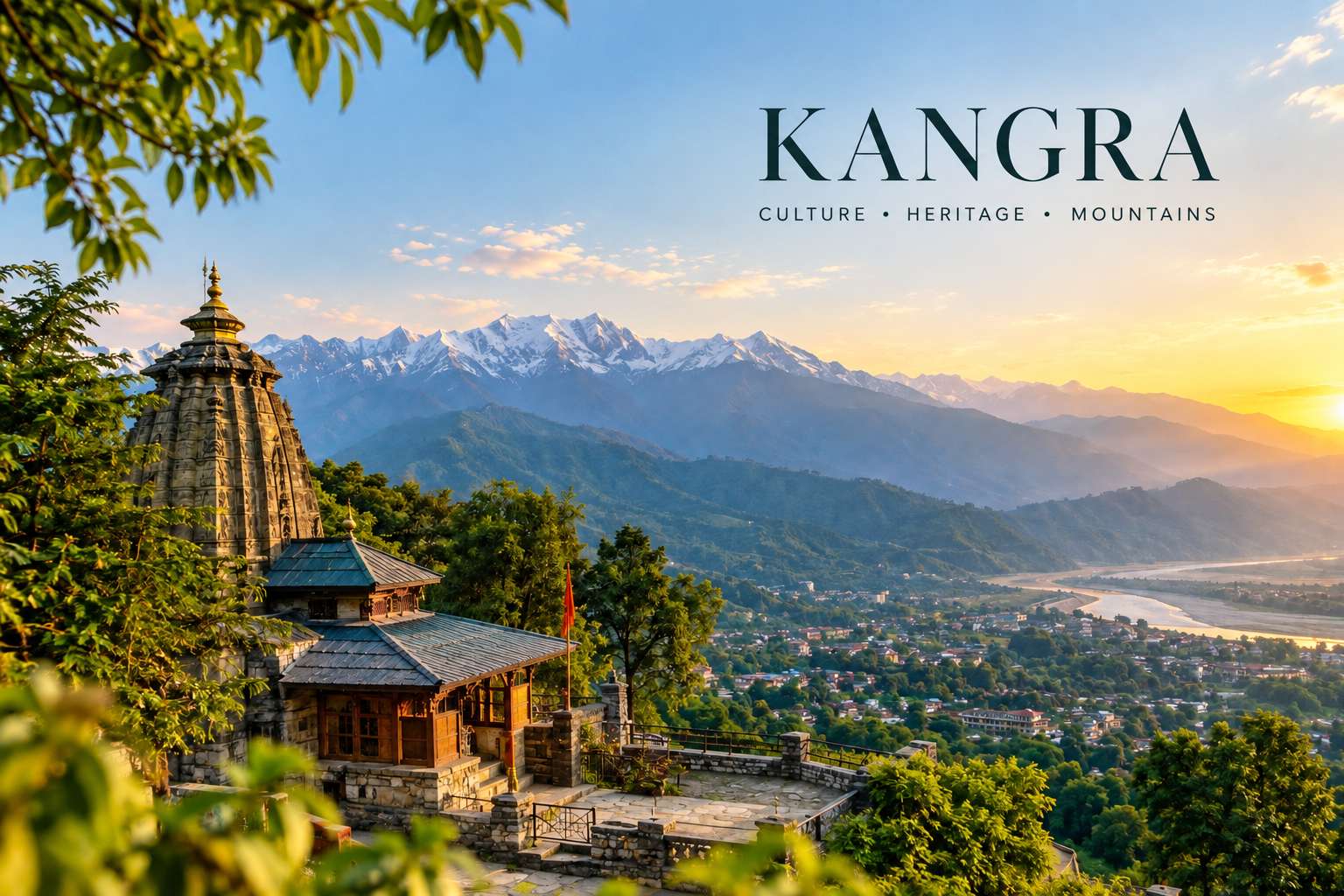

One of the most famous temples of Himachal Pradesh is Kathgarh Mahadev Mandir. Lord Shiva and Parvati are worshipped as idols in this temple. The Kathgarh Mandir is decorated with a gigantic “Shivaling” cut vertically into two halves. The smaller half is worshipped as Goddess Parvati and the larger one as Lord Shiva. This unusual shivling, called Ardhanarishwar Shivling, represents both the Goddess Parvati and Lord Shiva. As the seasons go by—from summer to winter—the distance between the two parts continues to increase and decrease. An old temple with a six-foot-long and five-foot-round “Shivalinga” was built in the Mughal style. This “Linga” is special and cannot be seen anywhere else in the world. Let’s discuss more about Kathgarh Mandir, Himachal.
A Situation in Perpetual Change
Kathgarh Mahadev Mandir is a very ancient Shiva temple. Kathgarh Mandir is famous among Himachalis across Himachal Pradesh and the surrounding states of Punjab, Haryana, and Jammu & Kashmir. It is situated in the Indora subdivision, 15 km from the Damtal region. The characteristic of this temple is the varying distance between the two Shivling parts. The two halves meet on the sacred day of Shivratri, whereas the gap between them increases during summer and decreases during winter. The portion of the Shivling that symbolizes Shiva is 7-8 feet high, and the portion that symbolises Parvati is 5-6 feet high. The Shivling is octagonal and is made of blackish-brown stone.
Origins in Mythology
According to the Shiv Puran, it was in a violent war between Lord Brahma and Lord Vishnu that the Shivling had its origin. To create peace after witnessing the destruction, Lord Shiva took the form of a ling. It is believed to have emerged at the location where the Kathgarh Mahadev Temple currently exists.
There is another custom that associates the Shivling with the Gujjar community who once lived in the region. Devotees performed rituals by pouring milk over the Shivling, a sacred stone believed to be self-manifested. It would continue to grow even after Bhairav Ji kept cutting it down time and again. The king excavated the place after getting to know about this, and scholars recommended that individuals worship Lord Shiva during the month of Shravan. Therefore, the Shivling assumed its present shape, with the two parts representing Shiva and Parvati. Shivling is a 5.5-foot-high stone, while Parvati is depicted by a smaller stone that is two inches away and one and a half feet shorter. Shiva and Parvati’s distance gets narrower on January 15 and then begins to increase again. When their wishes are fulfilled, devotees visit the temple to take part in yatras.
History of Kathgarh Mahadev Mandir
Alexander’s Connections
Alexander the Great’s visit in 326 BC is connected to the temple’s history. According to legend, Alexander observed a Fakir praying to the Shivling when he reached the village of Mirthal near the Beas River. Alexander volunteered to take the Fakir to Greece for a lot of money, but the Fakir refused, asking for permission to go on with the usual worship. Alexander was so touched by this act that he levelled the site and constructed a wall around the Shivling. He also constructed octagonal platforms that remain standing to this day, facing the Beas River.
According to local accounts, this is where Alexander’s campaign of conquest came to a halt, as his soldiers refused to advance further, reportedly influenced by the courage and determination of the local people. Kathgarh is a historically significant place since, as per historian Shri Sukhdev Singh Charak’s book History and Culture of Himalayan State, Alexander’s last camp was near Mirthal.
The contributions of Maharaja Ranjit Singh
Maharaja Ranjit Singh’s time experienced a great interest in the temple. Revering the sanctity of the Shivling, Maharaja Ranjit Singh commissioned a grand temple to shelter and protect the self-manifested Shivling from the harsh weather. For the upkeep of the temple and to ensure easier access by the devotees, he took the initiative to upgrade the neighborhood.
The religious significance of Shivratri
Maha Shivratri is regarded as a sacred festival dedicated to Lord Shiva, with devotees observing it through prayers, worship and devotional practices. Devotees traditionally observe a fast, visit Shiva temples and offer prayers, water, milk and sacred offerings that are dear to Lord Shiva over the Shivling. Many also stay awake through the night, participating in Puja, chanting and devotional songs as an expression of their faith.
At Kathgarh Temple, Shivratri becomes an especially meaningful occasion as devotees gather to worship the distinctive Shiva-Parvati stone formation. The temples witness a large gathering of pilgrims who comes to perform rituals, seek Lord Shiva’s blessings and experience the spiritual atmosphere of the festival. The combination of ancient traditions, temple worship and community devotion makes Maha Shivratri an important celebration in Kathgarh.
Festivities and Devotion
The annual four-day fair on Shivratri makes the Kathgarh Mahadev Temple a hub of activity. The market, organised by the Kathgarh Mandir Nyas, draws devotees from across the country, especially on Mondays in the month of Saavan and on Shivratri. Darshan of the Ardhanarishwar form of Shiva and Shakti, say devotees, brings peace and prosperity by solving all mental and domestic problems.
The temple stands as a testimony to the cultural and religious heritage of ancient India. The temple is also a historical landmark and a center of worship with its octagonal shivling and platforms with views over the Beas River. Tourists also love to visit another point of tourist attraction, namely, the shrine’s well, whose water was once sought after by Maharaja Ranjit Singh.
What makes Kathgarh Mandir a Spiritual Destination?
This temple is one of the best places to go if you want to feel spiritual. The Kathgarh Mandir will provide you with a sense of inner peace and calmness. The unique Ardhanarishwar Shivling in the temple, symbolizing the union of Shiva and Parvati, contributes to its spiritual ambience. According to local belief, the shifting gap between the two halves of the Shivling represents divine power and the forces of the cosmos. Pilgrims visit the temple, especially during Shivratri, to witness this sacred phenomenon and fulfil their wishes.
Why devotees travel to Kathgarh during Shivratri
Shivratri brings a special spiritual atmosphere to Kathgarh, attracting devotees who travel to the temple to deepen their connection with Lord Shiva. Many devotees visit Kathgarh to offer prayers and seek blessings, while others take part in special pujas, ritual and devotional gathering held during the festival. For many visitors, the journey is also an opportunity to experience the traditions and atmosphere of this historic temple.
During, Shivratri, Kathgarh becomes a vibrant meeting place for pilgrims from different places. The sight of devotees gathering for worship, participating in prayers and celebrating the festival together adds a strong sense of faith and community to the occasion. This combination of spiritual devotion, traditional worship and festive celebration makes Shivratri visit to Kathgarh and memorable experience.
Things to do in Kathgarh Mandir
#1. Seek blessing at the sacred shivling
Devotees can seek blessings from this unique temple and offer their worship with the things that are dear to Mahadev. During Monday’s especially, devotees offer milk over the shivling as the ritual is deeply embedded while performing worship of Lord Shiv.
#2. Explore the historic temple
Take time to observe the temple’s architecture, surroundings and the heritage associated with Kathgarh. You will be fascinated with the legends associated with it.
#3. Experience Shivratri celebrations
If visiting during Maha Shivratri, participate in the prayers, rituals and festive atmosphere that brings numerous devotees to the temple. It brings many devotees around the world to take part in the fair and the festival held on Maha Shivratri.
#4. Enjoy the peaceful surroundings
Spend some quiet time around the temple and appreciate its natural setting away from the bustle of larger tourist destinations. With the positive aura of the place, one can find peace touching within their soul.
#5. Capture the temple and its surroundings
Photography can be a nice way to document the architecture and scenic surroundings, while being mindful of any restrictions on photography inside the shrine. The temple’s edifice itself provides many aesthetic frames to capture.
Conclusion
At Kathgarh Mahadev Mandir in Himachal Pradesh, the evergreen symbol of tradition and piety stands out. Pilgrims and travellers come to the temple due to its unique Ardhanarishwar Shivling with mythological origin and historical prominence. Kathgarh Mandir is a popular cultural landmark and spiritual retreat, augmented by the annual festivities during Shivratri and the peaceful environment with a view of the Beas River.
FAQs
Q. What Makes Kathgarh Mahadev Mandir Unique?
The vertically split Ardhanarishwar Shivling with one side showing Lord Shiva and the other Goddess Parvati is what makes Kathgarh Mahadev Mandir unique. The divide between the two differs season-wise throughout the year and shuts up on Shivratri, based on the time of the year.
Q. Where Is Kathgarh Mandir Located?
Kathgarh Mandir is approximately 15 kilometres from the Damtal region, in the Indora sector of Himachal Pradesh. A lot of pilgrims from Punjab, Haryana, and Jammu & Kashmir travel to this famous Mandir.
Q. What Historical Significance Does Kathgarh Mahadev Mandir Have?
The temple has a lengthy history with Alexander the Great, who erected a protective wall around the Shivling. Along with supporting the temple’s construction, Maharaja Ranjit Singh played a role in ensuring its continued upkeep and access to pilgrims.
Q. What Is The Best Time To Visit Kathgarh Mandir?
The best time to visit Kathgarh Mandir is during Shivratri when thousands of pilgrims come to the temple for a grand four-day fair. For darshan, Mondays in the month of Saavan are also extremely auspicious.
Q. What do devotees do at Kathgarh Temple during Shivratri?
Devotees visit temple to offer prayers and sacred offerings, participate in puja and other religious rituals, observe fasting and take part in the festive gatherings held during Shivratri.
Q. What is the religious importance of Maha Shivratri?
Maha Shivratri is an important Hindu festival that falls in Phalgun month, is very dear to devotees. Devotees commonly observe fasting, perform puja, chant prayers and in many traditions, remain awake during the night as an expression of devotion.
Q. What makes Kathgarh Temple different from another Shiva Temple?
Its remarkable naturally formed two-part stone structure, traditionally associated with Shiva and Parvati, gives Kathgarh temple a unique identity and adds to its religious and cultural importance.